
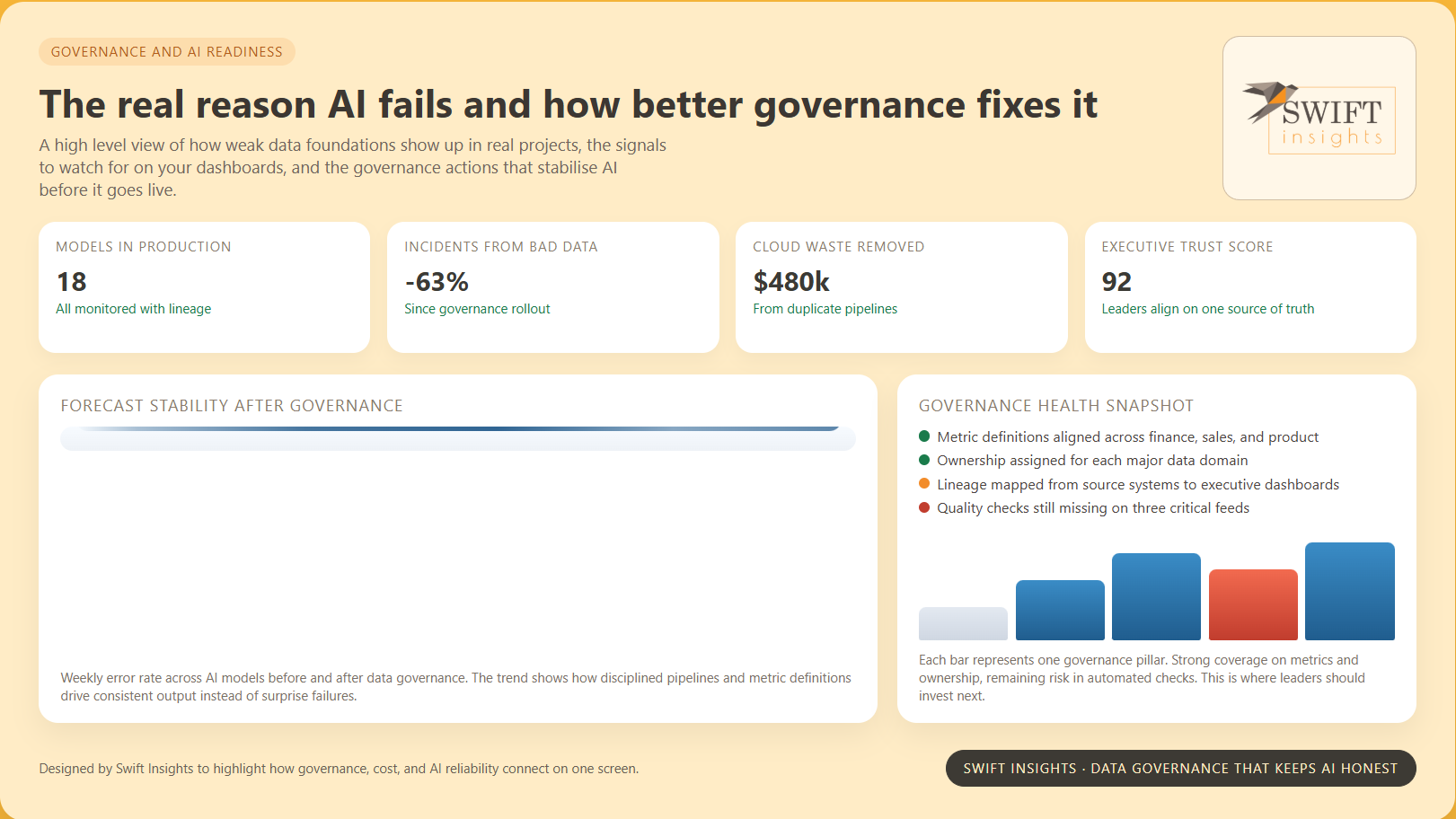
AI readiness is often treated as a model problem, but in reality it depends on how governance and AI work together. AI promises speed, automation, and better decision making. However, many companies still do not get the results they expect. The real issue usually comes from a weak data foundation. When data is scattered, inconsistent, or not governed, AI becomes unreliable and costly to maintain. This is a common reason AI fails in many companies today.
What We Found About the Reason AI Fails
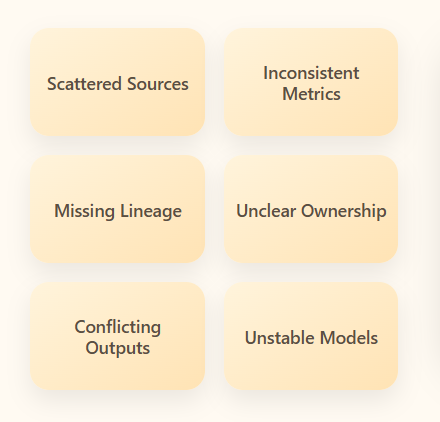
During a recent review, we saw the same issues we see in most organizations. Their data lived in several systems, metric definitions changed between teams, lineage was missing, and ownership was unclear. Because of these gaps, the AI model produced different results depending on the source and the date. Strong AI readiness depends on clean and consistent data.
For more leadership context, see our article on the five questions every CDO should be asking.
How We Fixed It
Before building the model, we reviewed the company’s entire data environment. We quickly found pipeline failures, duplicated cloud jobs, and a metrics layer that produced conflicting numbers.
To fix this, we stabilized pipelines, rebuilt metric definitions, added governance rules, and introduced automated quality checks. We also removed unused cloud workloads to cut waste. As a result, the forecasting model became consistent and leadership stopped debating which numbers to trust. Their team also gained back engineering time.
If you want to see how strong reporting structure supports AI success, review how automated dashboards reshape decision making.
What This Means for Governance and AI
Across the industry, AI projects fail for predictable reasons. Teams focus on the model and overlook the data environment behind it. Without strong governance, clear definitions, and documented lineage, even advanced models cannot produce reliable results.
This is why governance and AI must be developed together. Companies that invest early in structure move faster with fewer failures. For more context, see why internal BI teams often need a partner to reduce backlog pressure.
What Leaders Gain
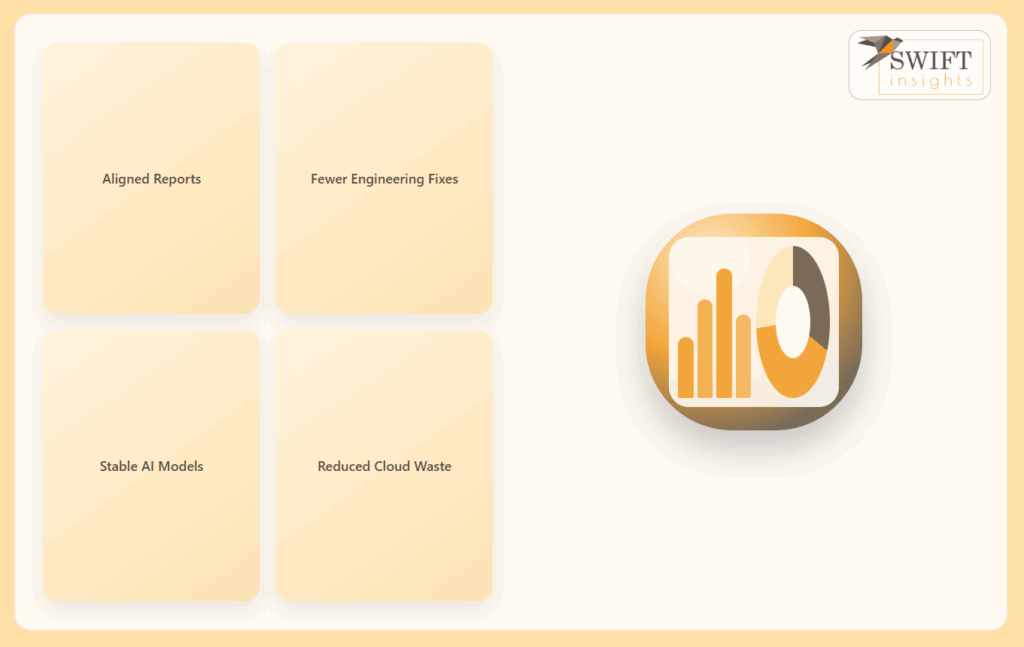
A strong foundation produces immediate benefits. Reports align across teams. Engineers spend less time fixing issues. Models behave consistently. Cloud waste drops as unnecessary jobs are removed. Executives make decisions using numbers they trust.
For more insight into high-performing habits, read our guide on the dashboard habits that separate top-performing companies.
Leaders aiming for stronger AI and cloud performance can also benefit from our breakdown on maximizing cloud cost savings using Tableau and AWS best practices.
What Leaders Should Do
- To improve governance and AI outcomes, leaders should:
- Define and document key metrics.
- Assign clear ownership for each data area.
- Track lineage from source to dashboard.
- Add automated quality checks.
- Review cloud workloads quarterly to remove waste.
You can also explore specific use cases, such as improving retention through customer lifetime value dashboards, boosting conversion through data driven insights, or building deeper intelligence through comprehensive healthcare data views.
For an external overview, Google provides a simple guide on data governance best practices.
Final Note
AI succeeds when the data beneath it is stable, governed, and consistent. Companies that strengthen governance and AI together gain faster insights, more accurate models, and lower engineering overhead. If your team is planning new AI projects, begin with the data layer. Swift Insights provides the engineering structure needed to make AI reliable and cost effective.