

In today’s data-driven world, many organizations build dashboards and expect them to solve decision-making problems instantly, but adoption often falls short. According to a BARC and Eckerson Group study, only about 25% of employees actively use BI and analytics tools, meaning most dashboards never gain traction (barc.de) and (eckerson.com). The result is wasted time, untrusted insights, and underused data assets. High-performing companies avoid this outcome by developing dashboard habits that transform reporting into real decision-driving tools.
At Swift Insights, we have seen these habits in action across some of the most data-driven organizations we have partnered with. From global retailers streamlining weekly sales reviews to healthcare firms unifying fragmented reports, the consistent thread has been the same — clarity in data builds confidence in decisions.
Here are five dashboard habits that consistently set top-performing organizations apart:
1. They Begin with the Question, Not the Data
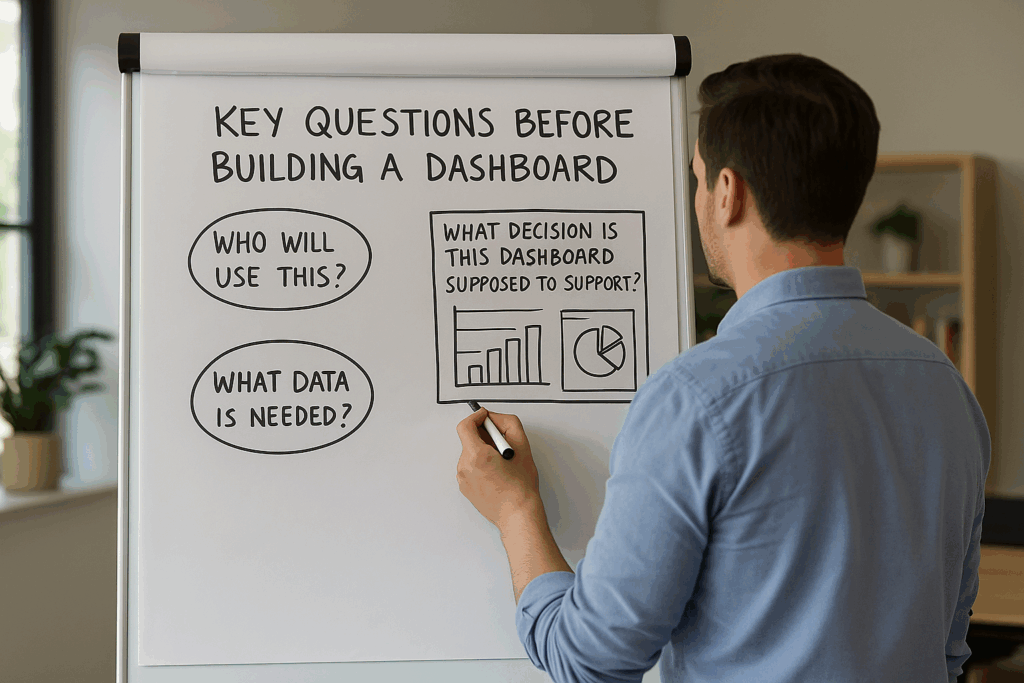
Before designing a dashboard, leaders in top companies start by asking, “What decision is this dashboard supposed to support?” They define the business goal first and then choose the data and visuals that directly serve that goal. Because of this, every chart, metric, and filter has meaning, and users understand how it connects to action.
2. They Keep Design Simple and Focused
Complex dashboards confuse users, while simple ones guide them to insight. The best dashboards use clean layouts, consistent colors, and clear labels. They focus attention on what matters most, helping users interpret insights quickly and confidently. Good design does not just make dashboards pretty; it makes them make sense.
3. They Anchor Dashboards to Business Outcomes
Dashboards that fail to connect data with outcomes lose relevance. High-performing companies always link dashboards to real goals like operational efficiency, revenue growth, or customer satisfaction. According to a study published by Harvard Business Review in collaboration with Google Cloud, data and AI leaders are significantly more likely to outperform peers in profitability, efficiency, and innovation (hbr.org) and (cloud.google.com). When insights are tied to measurable results, dashboards become strategic tools, not just visual summaries.
4. They Automate, Monitor, and Build Trust
A dashboard that depends on manual refreshes or inconsistent sources quickly loses credibility. Leading organizations automate their data pipelines, apply monitoring systems, and document lineage to build trust in the numbers. Recently, one of our enterprise clients reduced decision-making time by 40% after implementing automated dashboards that refreshed every hour, ensuring that leadership meetings were always fueled by live insights.
Another client in financial services moved from manual reporting to dynamic dashboards, allowing department heads to forecast with confidence instead of relying on static spreadsheets. A recent BARC report showed that while 58% of companies have observability programs, 42% still struggle with data trust and quality issues (ataccama.com) and (barc-research.com). The best dashboards earn confidence through automation and reliability.
5. They Cultivate a Data Conversation Culture
Top-performing organizations understand that dashboards are not meant to sit idle on a screen. They use them as conversation starters across departments, encouraging teams to ask why trends happen and what actions to take next. This consistent dialogue keeps data alive and connects insight to accountability.

The Real Difference Is in Habits
Dashboards alone do not make a business data-driven. It is the discipline behind their design, usage, and follow-up that creates impact. Studies show that companies who align their analytics habits with business goals are more likely to sustain growth and outperform competitors (improvado.io). When organizations focus on habits like clarity, automation, and trust, dashboards stop being reports and start becoming engines of action.
These experiences have shaped how our team approaches every analytics engagement. We do not just build dashboards — we help leaders build trust in their data, automate complexity, and connect analytics directly to business strategy.
If your organization is ready to make data your most trusted asset, Swift Insights can help you get there.
Learn more at swiftinsights.net