
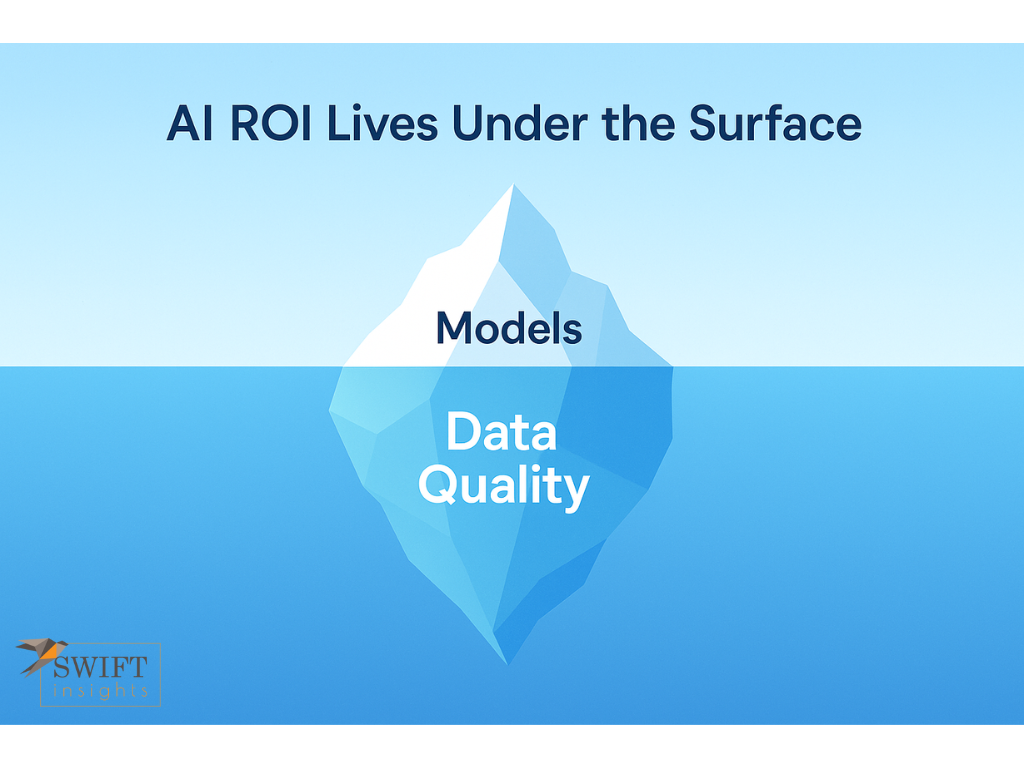
Many leaders start their AI plans by looking at the model instead of the data. However, the real ROI of AI data quality appears when clean, structured information drives every decision the model makes. This often looks impressive in strategy decks. However, real return on AI does not come from the model. It comes from the quality of the data underneath it.
AI projects rarely fail because the model is weak. They fail because the data is not ready. Once the foundation is clean, the model becomes easier to build and easier to trust.
Where AI ROI Falls Apart
There are common failure points in most AI projects. On the surface the problems look different, but they come from the same source. As a result, teams lose time and budget before they see value.
For example, companies struggle when data sits across many systems that do not connect. People use different definitions for the same metric. Ownership moves between teams without clarity. Governance is pushed to the end instead of placed at the start. Over time the project needs rework and extra reviews. All these issues come from data quality, not the model.
How Data Quality Creates Real Value
Clean data produces speed. Clear definitions build trust. Together they create real ROI that leaders can measure. Teams move faster because they do not debate the numbers. The work stays focused on insight, not on repair.
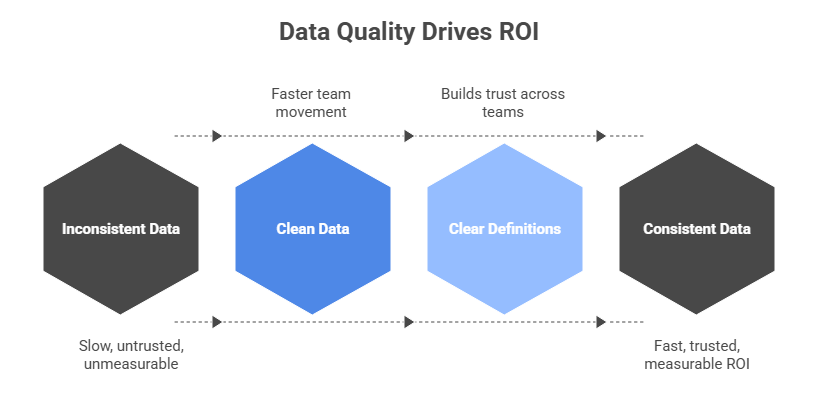
With clean pipelines, analysts do not rebuild dashboards to explain small changes. Models do not amplify noise or bias. Meetings end with a decision, not a follow up session. Updates take hours instead of weeks. The value appears in daily work, not only in a long report.
Because of this, AI becomes easier to scale. People feel confident when the numbers stay stable across tools and teams.
The Hidden Cost of Poor Data
Low data quality creates a quiet cost. At first it is easy to ignore. Later it becomes visible in missed deadlines and unclear results. Work slows even as the project looks active. Research from MIT shows that over 80 percent of AI project time goes into preparing and fixing data, not improving the model.
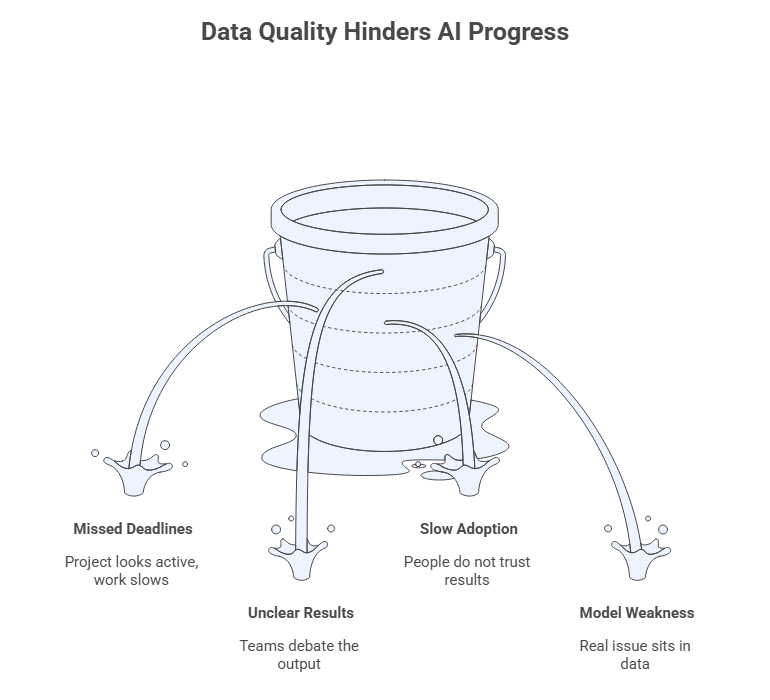
Time goes into cleanup instead of insight. Every change needs a full validation step. Teams debate the output because no one knows if the data shifted. Adoption slows because people do not trust the result. These problems make the model look weak, when the real issue sits in the data.
What Data Quality Really Means
Data quality is more than cleaning tables. It is a structure that prevents problems before they reach dashboards or models. The work covers systems, people, and rules.
Strong data quality includes shared definitions for important metrics. It includes one source of truth. It has clear ownership for each dataset. Data contracts stop schema drift. Observability tools find issues before users do. Metadata helps people understand what they are using. These practices support every AI project, even when the model changes.
Because of this structure, the platform can evolve without rebuilding everything from zero.
Why Data Beats Model Innovation
A stronger model improves accuracy by a small step. Better data improves performance across the whole system. Data upgrades help more parts of the business than a single model feature.
For instance, clean data improves targeting and reduces churn. Fewer errors lower operating cost. Forecasting improves because trends stay stable. Leadership trust increases because the numbers do not shift without reason. Model updates then become a choice, not a rescue.
Therefore, the model is the last lever. The data is the first.
A Simple Roadmap That Works
Teams do not need a long strategy deck to improve data quality. A short and clear path creates fast wins.
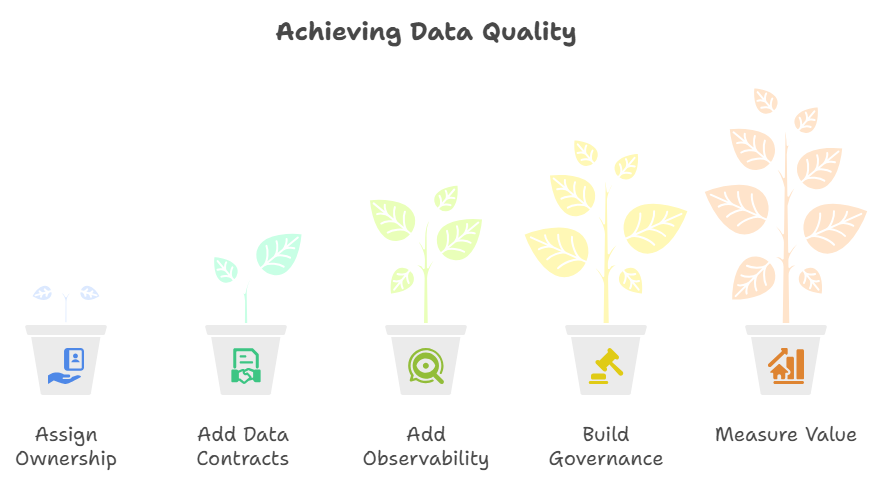
By moving in this order, the team builds trust while work continues.
The Bottom Line
AI does not fix data problems. It makes them easier to see. Companies that win with AI do not start with the model. They start with the foundation that supports every insight.
Clean data makes decisions faster. Shared definitions reduce confusion. Strong pipelines help systems stay stable as they grow. The model can change later because the base is solid.
The data is the engine. The model is the output.
If your team wants a short and honest map of where data quality is slowing AI, we can reveal it fast. Most gaps become clear in less than one week.
Real ROI starts with data quality. The model only amplifies what already exists.